




Getting Life insurance while living with Sleep Apnea
Sleep Apnea is a condition where your breathing stops and starts while you sleep. In Australia, an estimated 5% of the population has sleep apnoea, translating into approximately 1 in 20 Australians being affected.
While sleep apnea isn't usually classed as a life-threatening condition, it’s seen as a pre-existing health condition and so requires some additional information when you're applying for life insurance or disability insurance, so the underwriter can better understand what you're living with.
Read in this article
- Not being sure if you can get life insurance can make you lose sleep
- Understanding your AHI reading
- Understand what type of Sleep Apnea you’re living with
- Can I get life insurance while living with Sleep Apnea?
- How do insurance underwriters view Sleep Apnea?
- Getting ready for a Life Insurance application
- Know your AHI Sleep Index Number
- Frequently Asked Questions: Sleep Apnea & Insurance Underwriting
- Can I actually get life insurance if I have sleep apnea?
- What exactly is an AHI reading and why is it the "magic number"?
- Why does the insurer want 90 days of my CPAP data?
- Does it matter if I have Obstructive (OSA) or Central (CSA) sleep apnea?
- Why is sleep apnea considered a high-risk factor for insurers?
- Sources & Further Reading
Not being sure if you can get life insurance can make you lose sleep
For those folks living with sleep apnea, good sleep is a precious commodity in short supply.
For those navigating life and work with sleep apnea, the level of daily disruption is rarely the same for any two people. It can range from a minor inconvenience, to suffering sudden microsleeps, to a severe sleep robbing condition requiring the need to sleep with the aid of a Continuous Positive Airway Pressure (CPAP) machine.
Understanding your AHI reading
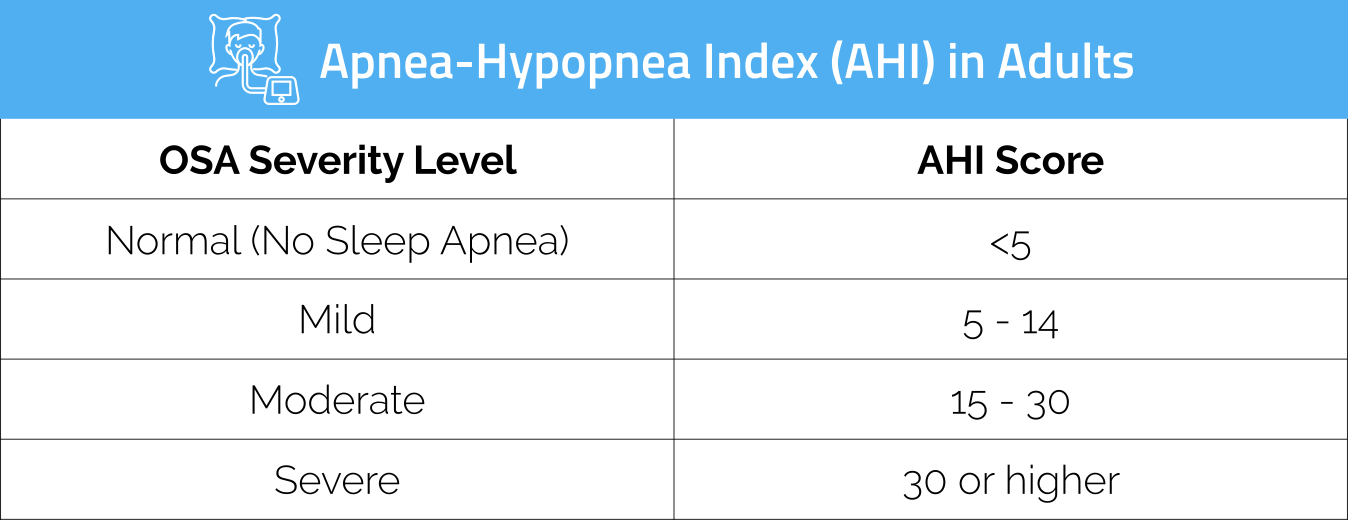
Your Apnea-Hypopnea Index (AHI) reading is the number of ‘apneas and hypopneas’ that occur during your sleep. This number forms the basis for a life insurance underwriters assessment of your insurability.
- The AHI reading indicates the severity of an individuals sleep apnea (ie: the temporary cessation of breathing) by counting the number of apneas and hypopneas (ie: abnormally shallow or reduced breathing,) during a persons sleep.
- A normal AHI is considered less than 5 events per hour, while severe AHI is more than 30 events per hour.
Understand what type of Sleep Apnea you’re living with
It's important to understand there are two main types of Sleep Apnea, with the most common being Obstructive Sleep Apnea (OSA).
- Obstructive and Mixed Apnea is where the airway is intermittently blocked during sleep, and is usually more manageable for life insurance, with options available depending on your level of compliance with your treatment plan.
- Central Sleep Apnea (CSA) is where the brain fails to signal the body to breathe, and this may be more difficult for most insurance companies to work with.
Can I get life insurance while living with Sleep Apnea?
With the right specialist life insurance advisor, usually the answer is Yes.
If you’re living with Obstructive Sleep Apnea (OSA), you may be able to secure life insurance, depending on the severity of your condition, any complications you may have had, and the consistent treatment you’re on. It will also depend on any other pre-existing medical conditions that may have developed over time too.
How do insurance underwriters view Sleep Apnea?
Sleep apnea can potentially affect life insurance premiums because life insurance providers view sleep apnea a pre-existing medical condition that can lead to other health complications such as heart disease, high blood pressure, and stroke.
Getting ready for a Life Insurance application
- Know the approximate date of your original diagnosis
- Know your current AHI sleep index number
- Be able to explain the degree it impacts your day-to-day living, and
- Get ready to supply the last 90-days of your CPAP machine data.
Know your AHI Sleep Index Number
The AHI number is a measure of how many times breathing stops during sleep in an hour.
When preparing for a life and disability insurance application when you’re living with an OSA diagnosis, you will be required to:
- Share your most recent sleep study result
- Disclose your Apnea-Hypopnea Index (AHI) number (to indicate your oxygen saturation levels while sleeping), and
- Supply the last 90 days of the CPAP machine recorded data to confirm you’re using the machine at least 80% of the time.
It's important to understand sleep apnea can impact your overall health and life expectancy.
This is because the condition places a lot of stress on your heart over time, which may result in high blood pressure, irregular heartbeats, or even heart failure in serious cases. Additionally, those dips in oxygen supply to the body, while you sleep, can damage blood vessels and increase your risk of having a stroke.
Many people are unaware that according to the governments Austroads Website & National Transport Commission, who set the acceptable health standards for drivers, cite paragraph 8.3 Medical standards for licensing indicate:'A person is not fit to hold an unconditional licence:
• if the person has an established sleep apnoea syndrome (sleep apnoea on a diagnostic sleep study and moderate to severe excessive daytime sleepiness*)'
Take the risks seriously - get your insurances sorted now, while you still can and use a specialist risk insurance advisor from Sapience Financial to help you get on with life - and sleep better.
Frequently Asked Questions: Sleep Apnea & Insurance Underwriting
Can I actually get life insurance if I have sleep apnea?
Yes, in the vast majority of cases, the answer is a resounding yes. While it is considered a pre-existing medical condition, insurers are very familiar with it. The "secret sauce" to getting a standard offer is demonstrating treatment compliance. If you are managing your condition effectively, you are often seen as a very manageable risk.
What exactly is an AHI reading and why is it the "magic number"?
The Apnea-Hypopnea Index (AHI) is the clinical measure of how many times your breathing is interrupted per hour. Insurers use this to grade the severity of your condition: Mild (5-15), Moderate (15-30), or Severe (30+). Your AHI helps the underwriter decide if they can offer cover at standard rates or if a "loading" (a price increase) is required.
Why does the insurer want 90 days of my CPAP data?
In the insurance world, "owning a CPAP" isn't the same as "using a CPAP." Underwriters want to see that you are using the machine at least 80% of the time. This 90-day data log provides the objective proof that you are actively reducing the risk of heart disease and stroke, which makes you a much more attractive person to insure.
Does it matter if I have Obstructive (OSA) or Central (CSA) sleep apnea?
It matters significantly. Obstructive Sleep Apnea (OSA) is a physical airway issue and is the most common type; most insurers handle this easily. Central Sleep Apnea (CSA) is a neurological issue where the brain fails to signal the body to breathe. Because CSA is often linked to other underlying conditions, it can be more complex to underwrite.
Why is sleep apnea considered a high-risk factor for insurers?
Underwriters aren't worried about the snoring; they are worried about the cardiovascular stress. Every time you stop breathing, your oxygen drops and your heart works overtime. Over years, this increases the risk of heart failure, hypertension, and stroke. Proving your condition is managed is the key to proving those risks are under control.
Sources & Further Reading
- Healthdirect Australia: Obstructive sleep apnoea (OSA) - The Australian Government's official health overview of sleep apnea, its symptoms, risks, and treatments.
- Sleep Health Foundation: Obstructive Sleep Apnoea (OSA) - Detailed fact sheets from Australia's leading independent authority on sleep health.
- AFCA: Approach to Pre-existing Medical Conditions - An official document from the Australian Financial Complaints Authority explaining how they handle disputes involving pre-existing conditions.
- Life Insurance Code of Practice - The official industry code setting out the standards and obligations for insurers when dealing with customers, including underwriting and claims.
Call us today on 1300 137 403 or email us here for a no-obligation private chat about your situation.
 Drew Browne is a specialty Financial Risk Advisor working with Small Business Owners & their Families, Dual Income Professional Couples, and diverse families. He's an award-winning writer, speaker, financial adviser and business strategy mentor. His business Sapience Financial Group is committed to using business solutions for good in the community. In 2015 he was certified as a B Corp., and in 2017 was recognised in the inaugural Australian National Businesses of Tomorrow Awards. Today he advises Small Business Owners and their families, on how to protect themselves, from their businesses. He writes for successful Small Business Owners and Industry publications. You can read his Modern Small Business Leadership Blog here. You can connect with him on LinkedIn. Any information provided is general advice only and we have not considered your personal circumstances. Before making any decision on the basis of this advice you should consider if the advice is appropriate for you based on your particular circumstance.


